
Is Antimicrobial Ductwork important? Well, consider this… Many say allergies and sinusitis seem worse than ever. Air and air-particle bacterial pollution may be the reason. The American Lung Association (ALA) released its annual “State of the Air” report in April 2025, and Houston didn’t fare well.
The Houston metro area ranked seventh in the U.S. for ozone pollution. This means almost half of H-Town’s residents are breathing unhealthy outdoor air. To summarize statements made by the ALA and AccuWeather:
While the air is generally acceptable, sensitive groups may experience minor symptoms from long-term exposure, and the overall air quality in the greater Houston area is poor and ranked among the worst in the nation. This air pollution is causing kids to have asthma attacks, making people who work outdoors sick and unable to work, and leading to low birth weight in babies.
Northwest Harris County communities, such as Magnolia and Tomball, had slightly better air quality. Some days are hazy due to the air pollution in high-traffic and industrial areas, including Satsuma Station and Greenspoint. For most days, the air pollution is only “moderate,” posing a health hazard to a lower percentage of our population. However, our area’s population boom and industrial growth are increasing significantly every year, putting outdoor air at greater risk of pollution. Antimicrobial Ductwork can help where you can control it… indoors.
Clean water and air are priorities for most of us. To reduce outdoor air pollution, we can walk and bike more or promote the use of public transportation. We can conserve energy by using smart thermostats and lowering electricity demand at home. Maximizing HVAC efficiency by replacing filters as needed is another way to improve outdoor air quality.
Healthy IAQ Becoming More Critical
Indoor air quality is increasingly important because we spend most of our time (90%) indoors. Indoor air pollutants and particles can be 2-5 times more concentrated than outdoor air. Summer and winter are seasons in which our IAQ is most at risk.
Summer IAQ challenges are:
- Air circulation – AC systems recirculate and spread indoor allergens: dust, pet dander, pollen, and cigarette smoke.
- Humidity – Houston-area humidity is legendary and sets the stage for indoor mold and mildew, causing respiratory issues.
- Indoor pollutants – Closed windows to keep the cool air “in,” trapping pollutants. Using cleaning products also recirculates chemically polluted air.
- VOCs – Volatile organic compounds are released from furniture, paint, and cleaning products. Summer heat exacerbates this off-gassing process.
- Wildfires – Residents living downwind from area wildfires can trap outdoor smoke inside their homes.
Winter also has higher unhealthy IAQ:
- Atmospheric inversions – Atmospheric inversions are a phenomenon in which air temperature becomes higher due to coastal influences and land-sea breeze oscillation, high-pressure systems, and surface-based radiation (caused by atmospheric heat loss).
- Heating systems – Poorly maintained HVAC units, fireplaces, and wood-burning stoves can release carbon monoxide, nitrogen dioxide, and harmful particulates indoors.
- Humidity – Other U.S. areas see lower humidity during winter months, but Southeast Texas humidity remains high, causing indoor mildew, mold, and respiratory issues.
- Indoor pollutants – Stagnant air circulation and dust, pet dander, and VOCs from cleaning chemicals are even more concentrated because of limited air circulation in homes.
Country Air IAQ Solutions for Magnolia, Tomball, and NW Harris County
Managing home and office air quality can combat the harmful effects of pollution. You can improve your indoor air quality by reducing or eliminating sources of indoor air pollutants like pet dander, but for most of us, our four-legged friends are family members. And even though Uncle Ed smokes outside, he brings that smoky smell inside. Increasing ventilation (opening windows and doors) can help, but it also increases energy consumption and can bring polluted outdoor air indoors.
Ask us about:
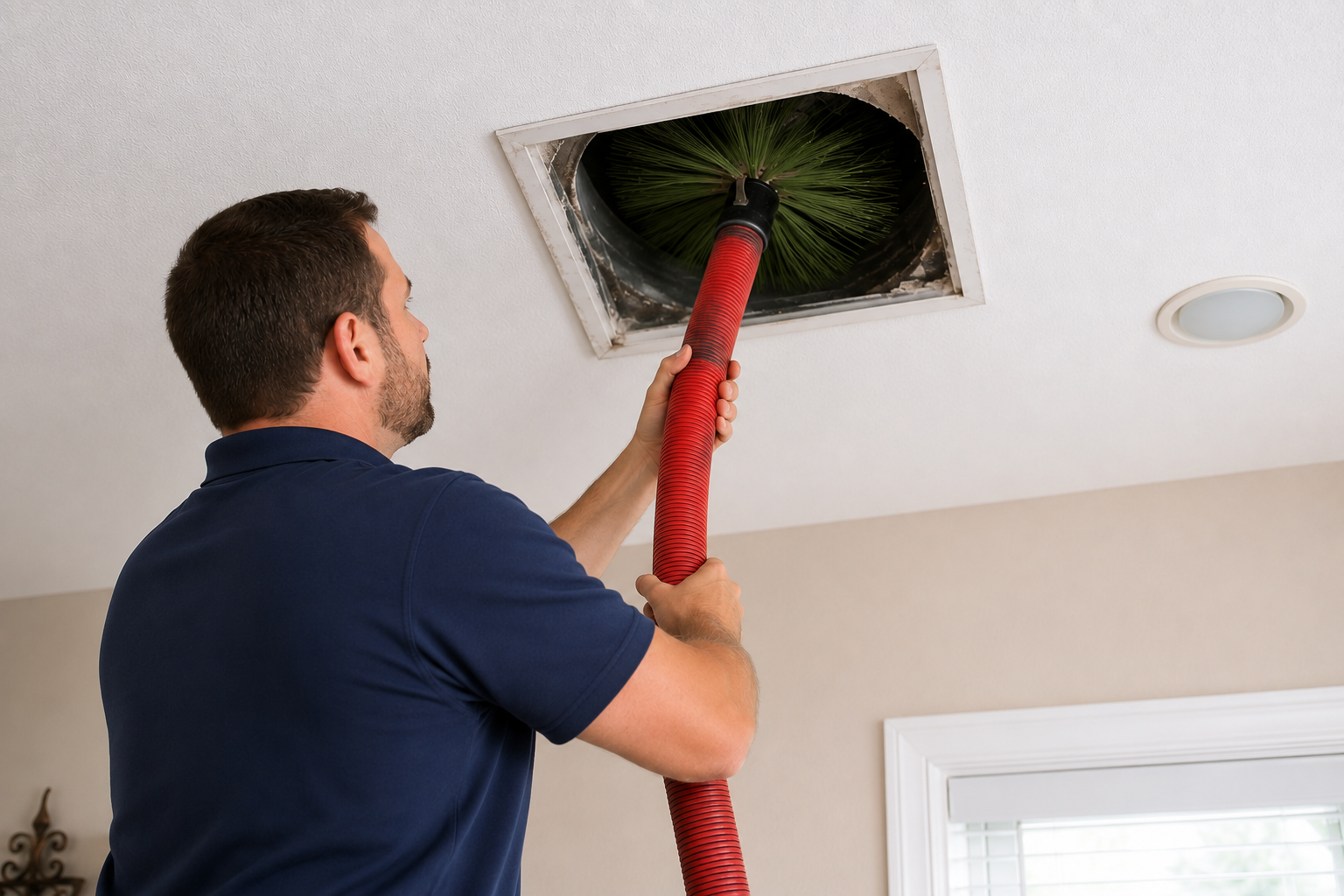
- Air duct cleaning – Air duct cleaning can reduce or eliminate breathing problems in homes and offices. We will inspect your air ducts to determine if air duct cleaning is recommended, and unlike many companies, we’ll tell you if you don’t need that service. Clogged air ducts also make your cooling unit work harder. This shortens the lifespan of your expensive HVAC system and increases monthly energy bills.
- AMBlue II Ductwork – AMBlue II is a mold-resistant, premium antimicrobial flexible air duct that we use in all new ductwork installations and replacements. This product is offered by J.P. Lamborn Co., one of the most recognized and respected manufacturers of superior ductwork. JPL’s AMBlue composition provides long-term durability and improves indoor air quality. Its primary benefit is its ability to inhibit the growth of bacteria, mildew, and mold.
- Antimicrobial fogging – If we find mildew or mold in your air ducts, we may recommend antimicrobial fogging as part of a duct-cleaning service. Duct cleaning removes harmful particles and dust buildup, but antimicrobial fogging kills germs and sterilizes the air duct system.
- Media filters – Media filters trap and eliminate air impurities. We’ll install a media filter device in your HVAC’s return-air duct to remove dander, dust, pollen, and other airborne pollutants.
Country Air recommends twice-yearly maintenance for your cooling and heating unit, as well as regular filter changes, to maximize HVAC operating efficiency and improve indoor airflow. For many, that’s enough to manage indoor air quality, but some homes and offices need additional options for healthy IAQ.
Contact us to learn more.
Antimicrobial Ductwork FAQs
Frequently asked questions we receive about IAQ include:
Biological contaminants can come from cat saliva, dust, mildew, mites, mold, pet dander, pollen, roaches, and rodents. It’s not always about housekeeping: For example, indoor plants generate pollen. Dust mites are unavoidable and powerful allergens.
Biological contaminants also include airborne pollutants from infectious diseases. Some biological contaminants trigger immediate reactions (coughing, digestive problems, dizziness, fever, lethargy, shortness of breath, sneezing, watery/itchy eyes). Long-term exposure can cause severe allergic reactions.
Minimum Efficiency Reporting Values (MERVs) designate a filter’s ability to remove bacterial particles between 0.3-10 microns (µm). This helps you determine which filters perform best; the higher the MERV rating, the better the filter.