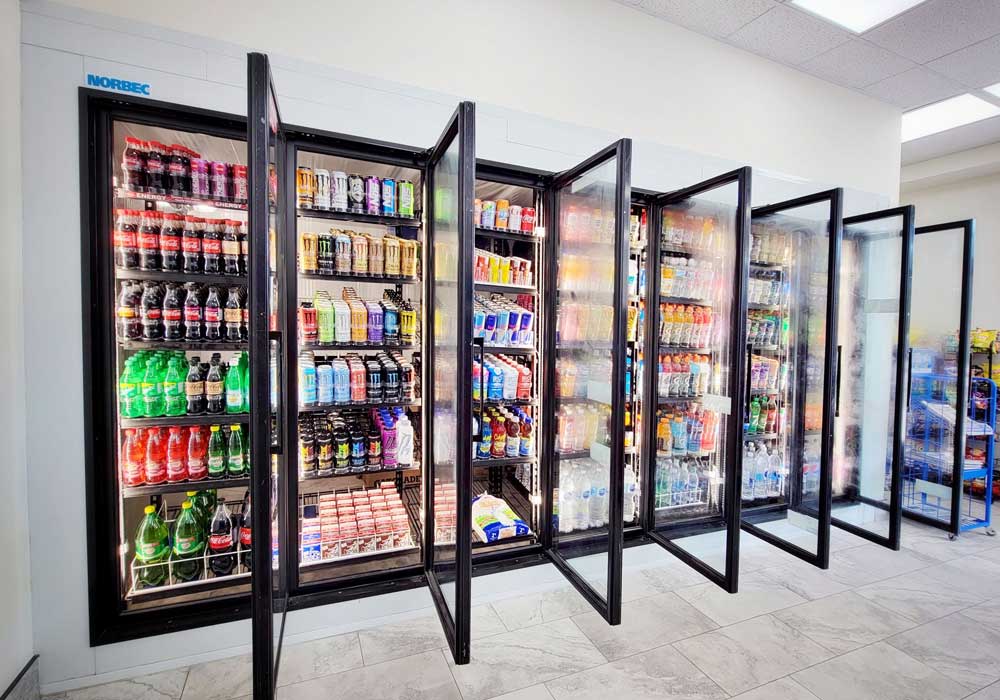
Consumers may not be aware of one important difference between walk-in refrigerator systems: “Retail” walk-in refrigeration units are accessible to the public. “Commercial” units are used for private or professional food prep, storage, etc. Both are heavy-duty refrigeration and freezer systems designed for frequent use that adhere strictly to food and medical safety guidelines.
This year, there are regulatory changes that will reduce carbon footprints and improve air quality. The new guidelines will apply to retail and commercial walk-in coolers and freezers.
Some of the updated regulations include:
- Commercial – Interior safety releases and diligent temperature recordkeeping are now mandatory. If the unit is under 7ˊ, door seals that reduce air infiltration are required, and if broken, are “an immediate maintenance necessity,” according to the Department of Energy (DOE). Also, independent third-party certification (NSF/ANSI 7) may be requested.
- Retail – Remote refrigeration equipment can no longer use high Global Warming Potential (GWP) hydrofluorocarbon (HFC) refrigerants. New remote refrigeration systems in the U.S. must comply with strict Technology Transitions Final Rule guidelines after Jan. 1, 2026:
- Cascade systems high-temp GWP limit of 300
- Remote condensing units < 200 lbs. GWP limit of 300
- Remote condensing units 200 lbs. GWP limit of 150
EPA’s AIM Act Impacts Walk-in Refrigerator Sales
Almost 80% of the HFCs emitted globally come from refrigeration, air conditioning units, and vehicles. To reduce the use of HFCs, the American Innovation and Manufacturing (AIM) Act was signed into law in 2020. As a greenhouse gas, HFC can be a thousand times more toxic than carbon dioxide per mass unit. This year’s changes to refrigeration systems alone should have a palpable and positive impact on the health of our environment.
The phasedown and phaseout of high-GWP hydrofluorocarbon refrigerants in walk-in coolers and freezers now bans new installations with high GWPs in 2026-2027. For businesses with older units, the only impact will be higher repairs, because sourcing outdated refrigerants will become more difficult. When you replace high-GWP equipment, expect to pay 20%-40% more for low-GWP technology, but your long-term energy savings should recover that expense.
11 Walk-In Refrigeration Key Changes*
U.S. businesses with walk-in commercial and refrigeration systems in place are not impacted. After January 1, 2026, installation of new, self-contained, or remote walk-in refrigeration systems should follow new restrictions and regulations. Some of the changes are:
- AI and IoT smart technology will be integrated into new systems to improve predictive maintenance and remote monitoring.
- Compliance with Annual Walk-In Energy Factor (AWEF) ratings must meet DOE standards.
- DOE standards for all walk-in refrigerator units should comply with new mandates by Dec. 31, 2028. (The chart can be found at Federal Register: Energy Conservation Standards for Walk-In Coolers and Walk-In Freezers. Because of supply chain issues, the EPA might raise the GWP limit to 1,400 by 2032 for some remote condensing units (food retail).
- Installation of new commercial/retail refrigeration systems using high-GWP (R-404A, R-48A, R-449A) will be prohibited.
- Remote systems using flammable A2L refrigerants have improved safety regulations for leak detectors, alarms, and safety/shut-off valves.
- Repair technicians will follow EPA 608 guidelines for minimizing emissions during service repair or refrigerant disposal.
- Safety measures for use with A2L refrigerants include upgraded ventilation requirements and specialized safety valves for each coil.
- Technicians are not permitted to retrofit existing equipment to accommodate A2L; new equipment must be installed.
- The threshold for leak inspection and repair is lowered. Systems containing 15+ pounds (previously 50) of high-GWP refrigerant are subject to stricter requirements for leak detection, repair, and reporting.
- Walk-in, display-door systems are required to meet new energy-efficiency standards by December 23, 2027.
- With more complex technological features and enhanced safety sensors, A2L systems may have higher upfront costs than legacies, but have similar operational features. The higher efficiency offers long-term savings.
Fast Service for Commercial, Retail Refrigeration Systems
When your commercial or retail refrigeration system goes down, you need a company that operates with a sense of urgency. Call Country Air for 24/7 walk-in refrigeration repair and maintenance.
Join our growing family of clients:
- Convenience stores & supermarkets
- Florists
- Laboratories, medical, & pharmaceutical facilities
- Restaurants & food service companies
…and other businesses in Magnolia and Tomball-area communities.
Reducing the carbon footprint of temperature-controlled storage systems is important to the walk-in refrigeration industry, but some changes take time. If you have any questions about compliance, contact Country Air.
FAQs
Two frequently asked questions about 2026 changes affecting the walk-in refrigeration industry are:
Q: What do I need to do about my older walk-in coolers and freezers?
A: Continue regular maintenance and repair as needed. But plan ahead. You can no longer install units using R-404A, 448-A, or 449-A.
Q: What will replace R-404A, R-448A, and R-449A?
A: The most common replacement A2Ls include R454A, R454C, R455A, and R1234yf.
*Country Air walk-in refrigeration professionals are already trained in the use and handling of A2Ls. But the EPA may still be revising and finalizing changes. The information included here reflects our understanding of the regulations as of its publication date. Some policies and requirements may change.