Don’t play games with Ductwork
Your heating, ventilation, and air conditioning ductwork serves as a securely sealed, clean-air air delivery system. Low or no maintenance, DIY fixes (using “ducktape” to patch ductwork, for example), or dirty air ducts can dramatically impact your energy bills, air quality, and health. “Don’t play games with ductwork” is cautionary advice for home and commercial business owners. Your IAQ (indoor air quality) is not a laughing matter.
4 Things That Can Happen If You Don’t Clean Your Air Ducts
If you live in Fetzer, Magnolia, and the Tomball area of Northwest Houston, you should take advantage of professional HVAC management with a reputable, local company for healthier indoor air. HVAC maintenance includes air duct inspection. Prolonging your HVAC system’s life is a big financial motivation for a maintenance agreement, but without timely air duct cleaning, you can jeopardize your family’s health.
- Contaminated, unclean air ducts can spread bacteria throughout your home, causing IAQ and breathing issues.
- Discovering contaminated ductwork makes you vulnerable to duct-cleaning scammers. Beware of companies that offer $45-$99 limited time specials. They may clean only a few vents because the whole-house duct cleaning is an upsell, costing hundreds of dollars. In addition to bait and switch, technicians may simply demand more money upon arrival. If you are scammed by duct cleaners, your duct system won’t be properly cleaned, and the work is never guaranteed.
- Ducts are attractive entry points for bugs, mice, raccoons, rats, and even snakes. Even if they visit and leave, they can also leave behind urine/fecal matter and contamination that can damage the ductwork, cause blockages, or necessitate professional pest control in addition to duct cleaning.
- Neglecting HVAC duct repairs (leaks, etc.) can cause inefficient operation. This results in higher energy bills now or expensive repairs later. What appears to be a minor issue can lead to ruining the most expensive appliance you own.
Why We Need Clean Indoor Air Now More Than Ever
Bad IAQ can increase risks of allergies, cardiovascular issues, cognitive problems, and respiratory diseases. Clean indoor air is more important than ever before because newer, airtight buildings trap indoor pollutants. We spend 60%-90% of our time indoors, so healthier IAQ is at a critical stage.
Allergy and sinus issues are believed to be historically worse than they’ve ever been in Southeast Texas. Allergen ratings are classified as:
- None
- Low
- Moderate
- High
- Extreme
The Houston area’s current air allergen rating is Extreme*. Keeping windows closed and staying indoors during severe outdoor air pollutant days is recommended by the EPA, AAFA (Asthma and Allergy Foundation of America), American Lung Association, and numerous government and medical agencies.
If you live in Northwest Houston, checking the outdoor air quality index (AQI) regularly is a good idea, especially if you or loved ones suffer from ongoing health issues, sinus problems, or allergies. Fine particulate matter (PM2.5) irritates the eyes, nose, and respiratory system in general. Unfortunately, PM2.5 is our greatest air pollution problem in the Houston suburbs. April 2026 outside air quality** is:
| City | AQI | PM2.5 | Status |
| Fetzer | Moderate | Dominant pollutant; elevated | Moderate/Fair, but health-sensitives may experience discomfort & weakened federal oversight could increase air pollution |
| Magnolia | Moderate | Dominant pollutant | Pollen levels high; overall poor air quality for health-sensitives |
| The Woodlands | Good | Dominant pollutant | Safe for outdoor activities but health-sensitives should monitor daily |
| Tomball | Moderate | Dominant pollutant | Moderate/Fair, but health-sensitives may experience discomfort |
What You Can Do To Ensure Healthier Air Ducts
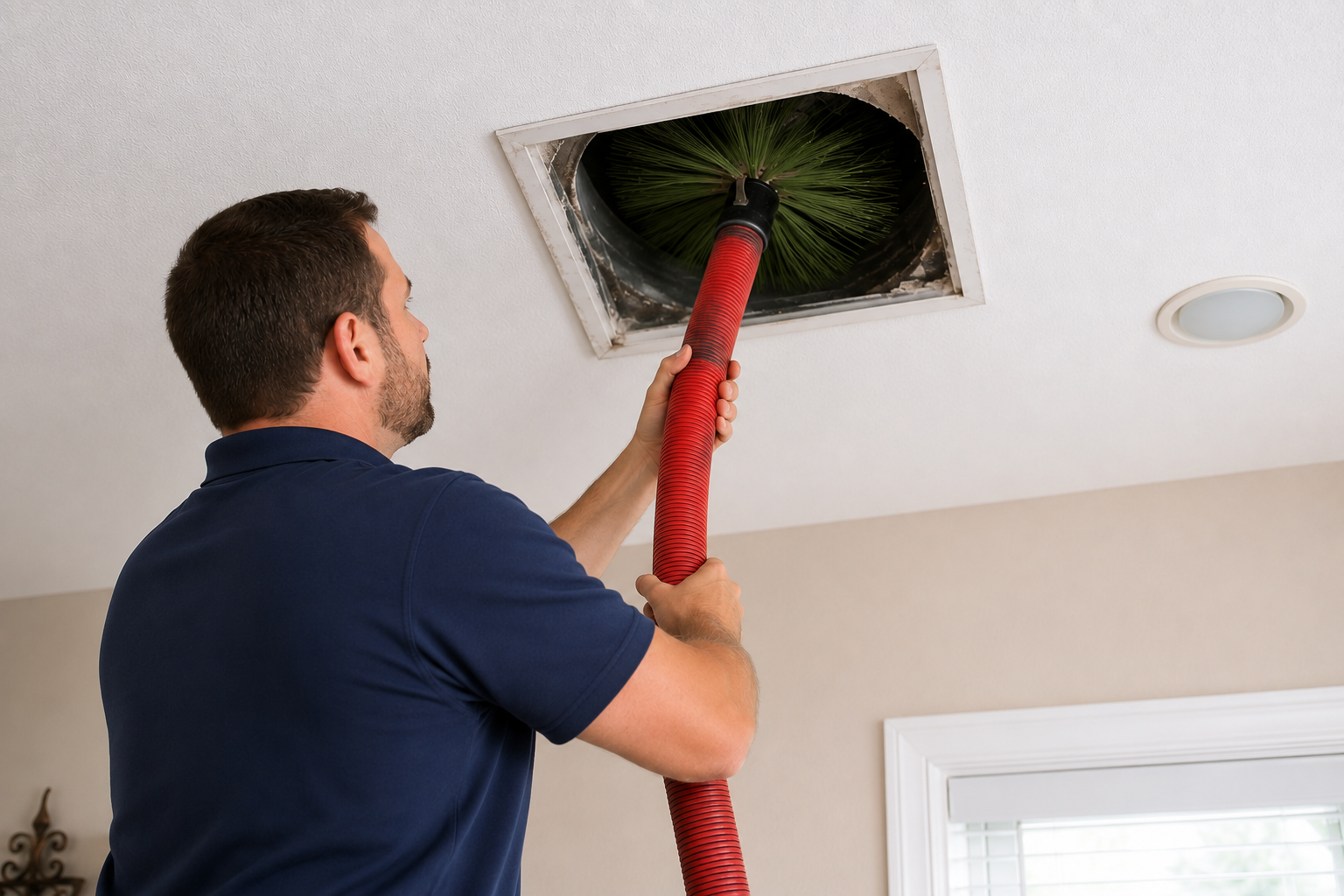
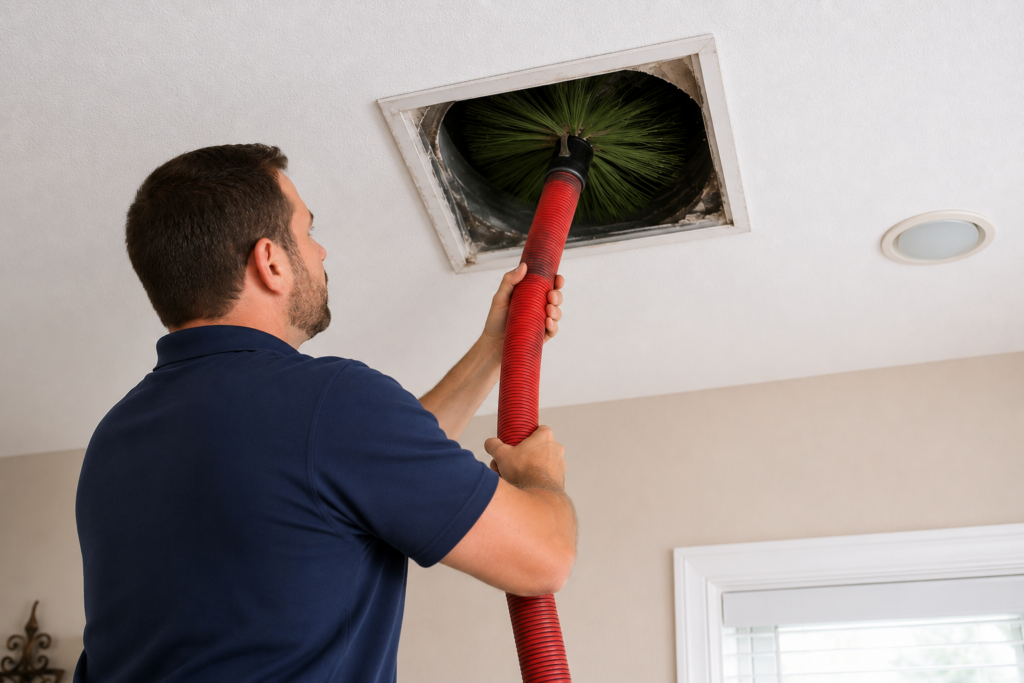
You can trust a local HVAC company with HVAC-certified, experienced, clean-air professionals to inspect your ductwork. Specialized equipment and dedicated time (3-5 hours/average home) are necessary to do the job right. Often, 2 technicians are required for maximum efficiency. (If there is an extra charge for additional pros, it should be included in the upfront quote before work begins.)
Here are some best practices for clean-air duct delivery:
- Air duct cleaning should be done as needed (approximately every 3+ years), but air duct inspection should be included with fall and spring maintenance. The frequency of duct cleaning can depend on factors like the number of household pets and family members with health issues.
- Change air filters regularly. This is the best way to prevent dust/dirt buildup in air ducts.
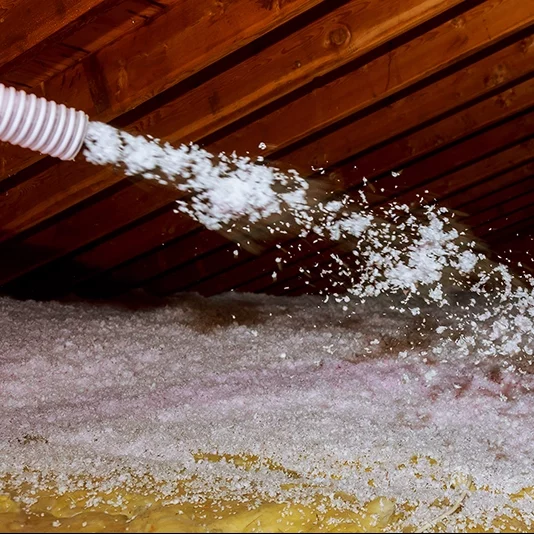
- Ducts should be insulated, especially in attics or crawlspaces. This reduces the risks of condensation and mold.
- Immediate air duct cleaning is necessary if you see dust buildup, mold, notice an ongoing musty or unpleasant smell in the air, or if vents’ air pressure drops.
- Leaks should be professionally managed by your licensed, insured HVAC company, but if you DIY, use a mastic sealant or UL-listed aluminum foil tape. The only good time to use duct tape to seal a duct leak is before you call us.
Country Air Helps You Breathe Easier
There are many advantages to living in one of the fastest-growing metro areas in the country. But the traffic boom, high humidity, and air pollutants linked to living in the “energy capital” of the U.S. can cause breathing problems for even the healthiest residents.
We care about your home/work family, and we care about the air you breathe. Call 281-356-8564 now to schedule a ductwork inspection.
FAQs
Two of the frequently asked questions we receive about HVAC ductwork are:
Q: How will I know if I have a ductwork leak?
A: A spike in energy bills, noticeable increase in dust, uneven temperatures, and faint noises when air is delivered into rooms can indicate a ductwork leak.
Q: What different kinds of ductwork?
A: Fiberboard, flexible tubes, semi-rigid, and sheet metal ducts are common. Country Air uses JPL’s AMBlue II ducts in all our new-home and replacement HVAC installs.
FYI: “Duck” vs. “duct” has been in the HVAC humor archives since 1943, when a working mom in an ordnance plant sent a letter to Johnson & Johnson. She requested stronger, waterproof sealing tape for ammunition cases. Duck-cotton waterproof cloth fabrics were already used as strong sealants. Adding adhesive created duck tape.
___
* July 9, 2026
** For accurate, real-time air quality data, it is recommended to check the EPA AirNow or the TCEQ air-quality websites.